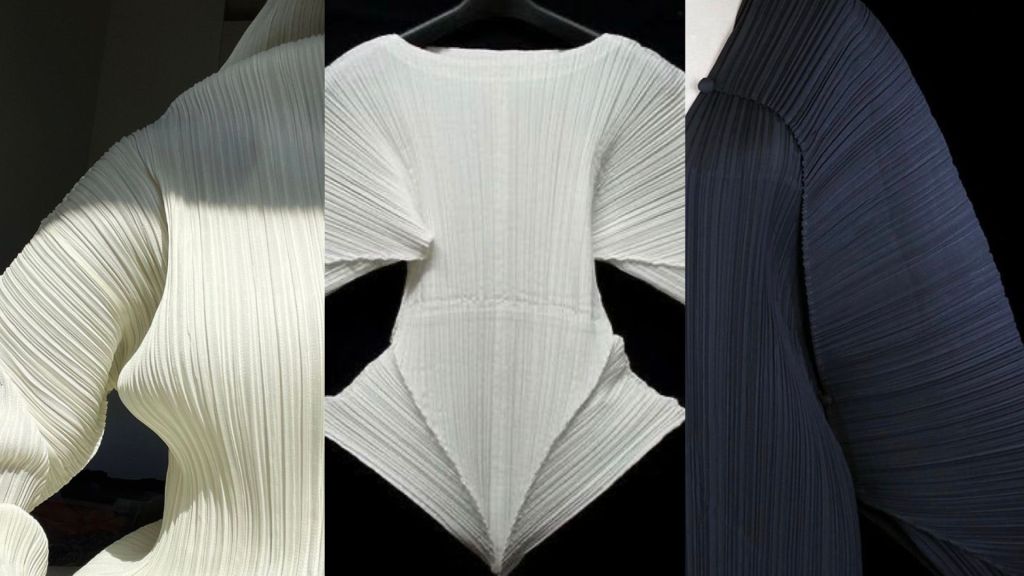
Pleats as Armor: From Cleopatra to Issey Miyake, the Garment That Translates Strength Into Presence.
Soundtrack of this piece:
What if I told you that one of the most widely known fabric techniques today is the very thread connecting you to an Egyptian from 4,000 years ago?
Between 4,000 and 4,500 years old. That is the age of one of the most recognizable fashion techniques in the world: pleating. Today, the name most tied to this technique is Issey Miyake, internationally celebrated for his iconic Pleats Please collection.
Yet this technique has been with us for so long that we barely stop to think about it. Many of you probably see pleating as something modern. I did too. But what makes pleating truly fascinating is not only its longevity, it is the journey it has taken through history. Some of the earliest traces were found in ancient Egyptian linen garments, where fabric was carefully folded and shaped into delicate pleats, named Kalasiris.
Hard not to hear that name without thinking of Game of Thrones and Khaleesi. You surely remember her. The character who brought an entire world, and its full audience, to her feet.

Back to the Kalasiris. The technique was originally applied to linen, a fabric ideally suited to the intense heat of the Nile valley. A single piece of fabric, draped and secured around the body or sewn into a soft cylindrical shape. The cloth was woven with extraordinary care, sometimes so sheer it revealed the silhouette underneath. Seductive, don’t you think?
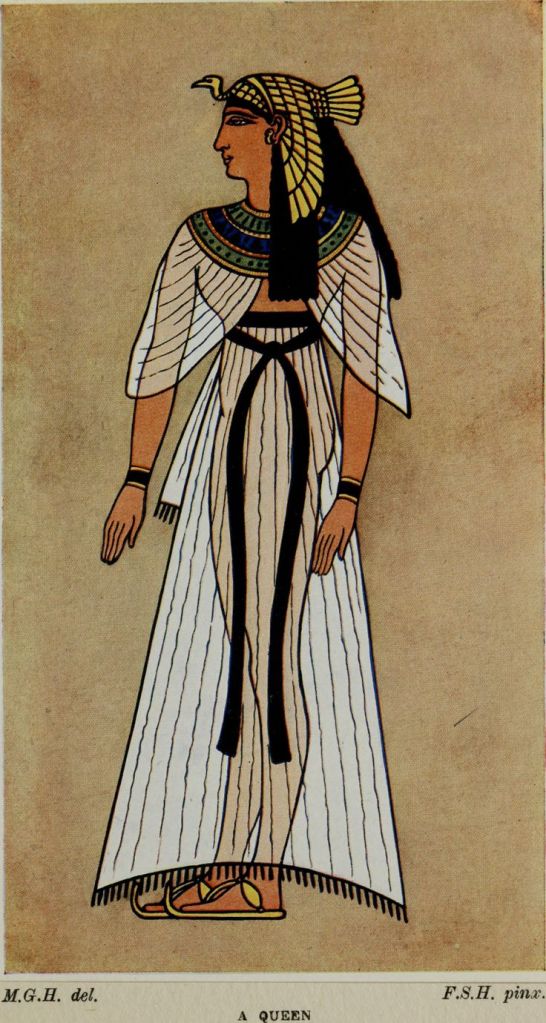
A simple textile practice connects us to one of the most fascinating civilizations in history. To wear pleats is to carry the same silhouette once worn by Cleopatra herself, a woman among women, queen of the ancient world.
Cleopatra and Khaleesi. I do not know about you, but the thought alone feels empowering.
Let us keep moving through time. Next stop, the Middle Ages and the Renaissance.
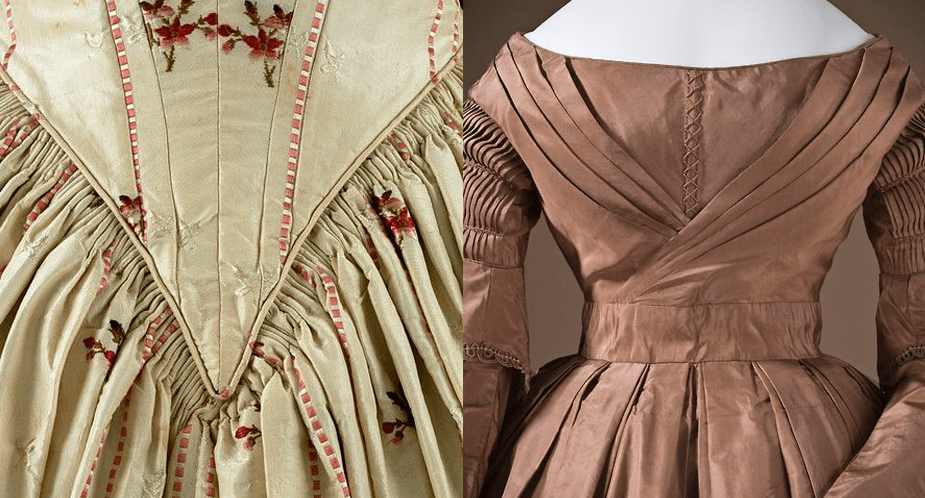
As garment construction techniques evolved, pleats shifted from a purely decorative role to a structural and technical one. They made it possible to shape garments and create specific volumes by controlling excess fabric in areas such as collars, sleeves, and skirts. This is how those full, voluminous skirts were built.
For a long period, pleats faded into the background, almost slipping into oblivion. It took a Spanish polymath, a modern Renaissance soul, to bring them back. Mariano Fortuny, artist, inventor, and designer, opened his maison in 1906, and in 1907 he revolutionized fashion with the Delphos.
It was crafted from finely pleated silk, often in a single tone. The pleats let the silk cling to the body without restricting it, echoing the freedom of Greek drapery while intensifying its sensual modernity. Daring for its time, the dress was worn by figures such as Sarah Bernhardt and Isadora Duncan, and remained in fashion until the 1930s.
Three decades in fashion? Today that would be a miracle!
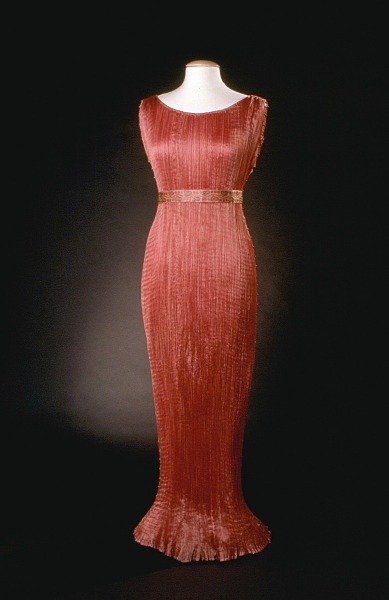
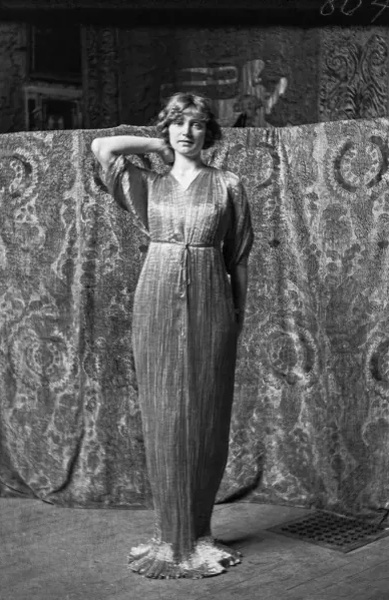
Fortuny’s Delphos dress.
One of the most fascinating parts of the story is that the patent for this technique is attributed to a woman, Madame Henriette Brassart, even though the patent itself was signed by Fortuny. Very little is known with certainty about the technique, which remains something of a mystery. Still, everything seems to suggest that this aesthetic revolution was the result of a collaboration. If anything is clear, it is that human beings, when united, are capable of creating true wonders. Or as they say in my adopted country, Virtus unita fortior.
From Fortuny onward, and for many decades, pleating followed essentially the same process. The fabric was first worked to achieve its draped texture, then cut and assembled into the garment. The complexity of this method, rooted in haute couture craftsmanship rather than ready to wear production, turned pleated garments into true luxury pieces.
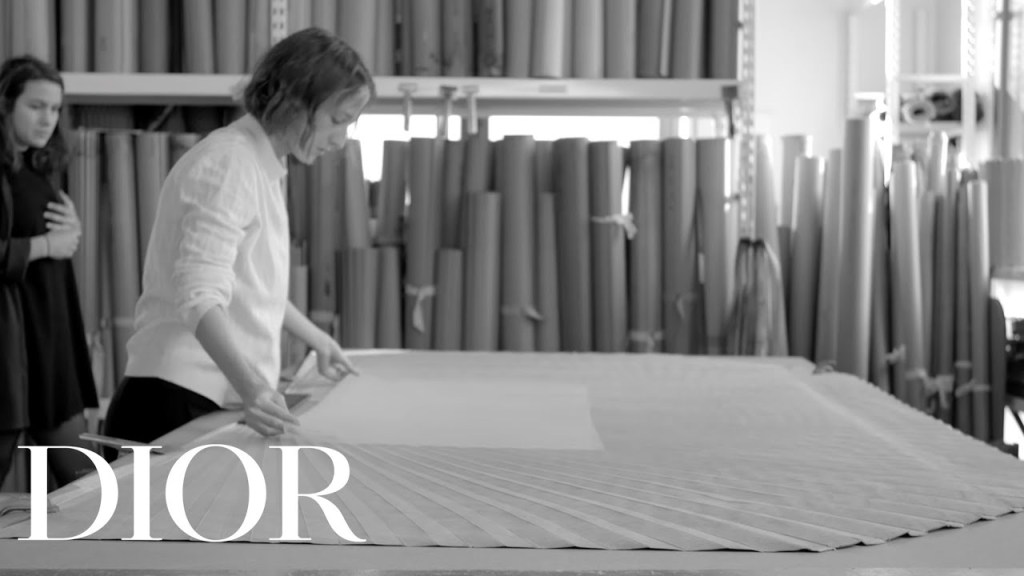
And then, in 1993, Issey Miyake arrived, and with him a turning point. What had once felt reserved for an elite was suddenly democratized, and his Pleats Please collection became one of the most versatile, practical, and innovative in fashion history.
Issey Miyake was not the typical designer trained in a prestigious fashion school. His story is far more interesting. Born in Hiroshima, he was a child when the atomic bomb destroyed the city in 1945. Witnessing a city destroyed and then rebuilt, where design, space, and architecture played a central role, shaped his vision deeply and led him first to graphic design. But his growing interest in fashion pushed him to present his first collection at Japan’s most prestigious fashion school, where he faced his first failure. According to the experts of the time, Miyake had vision but lacked technical skill.
From there, he set off on a journey. First to Paris, where he learned the intricacies of haute couture. Then to New York, where he embraced a more experimental and open approach to design. Pleats Please is the result of three combined experiences: the memory of Hiroshima, the discipline of Parisian couture, and a very modern desire to democratize clothing.
So what makes Issey Miyake’s pleats different? Everything had been done one way for centuries. Fabric was pleated first, then cut and sewn into a garment. Miyake reversed the order. He builds the garment first, in its full shape, oversized, and only then feeds it through the pleating process. The garment shrinks, the pleats set permanently, and a piece is born that holds its form, resists wrinkles, and survives being folded into a suitcase. This is what makes Pleats Please a piece that travels with you, moving effortlessly from a fashion forward look to a day of sightseeing or a romantic dinner.
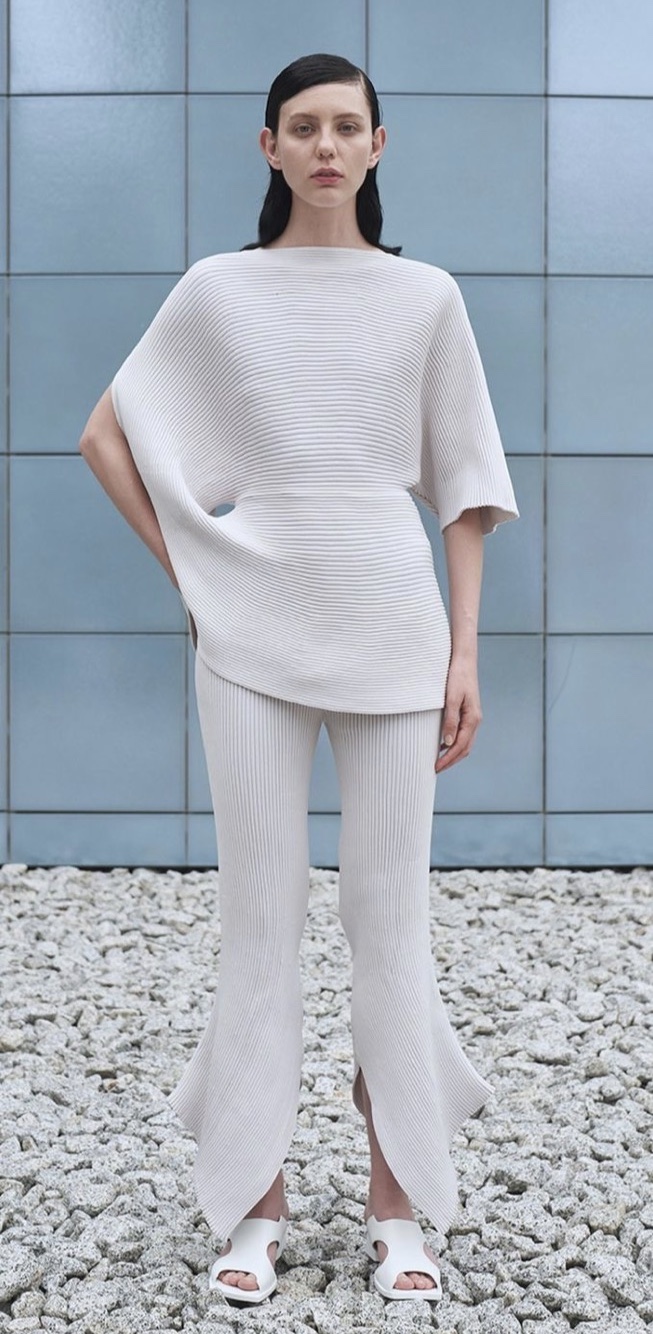
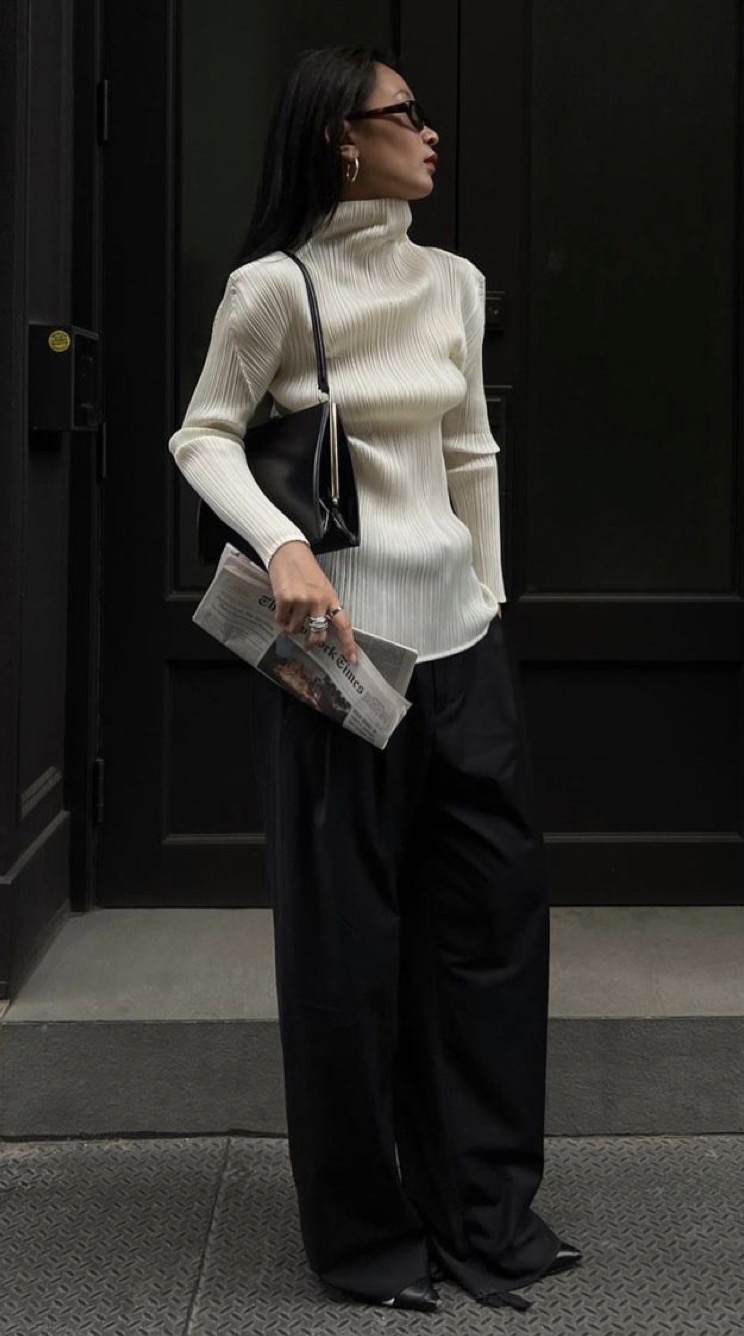
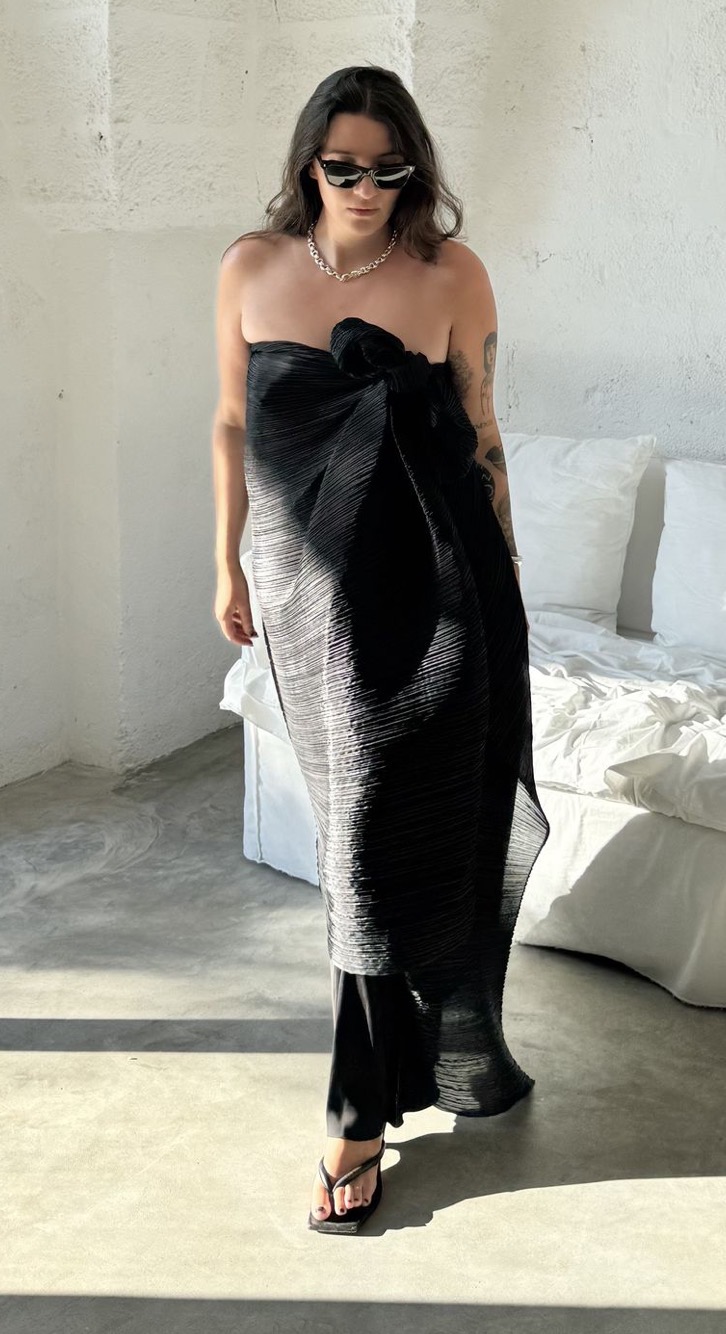
If you have followed me until here, you know I rarely recommend a specific designer. This time, I have to. The Pleats Please collection holds something rare: a history that stretches back four thousand years and a construction designed to live with you, and travel through decades without losing its form. It belongs in the kind of wardrobe built to be passed down and cherished by future generations.
Ready to make your Pleats Please piece last for decades? Join the Sardina’s Tales community on Substack.
You already know that what you wear changes how you feel. We spoke about it with Art.7 The Yellow Butter. Pleats work the same way, except they carry four thousand years of memory. Cleopatra. Isadora Duncan. Daenerys Targaryen. Women who stepped into the world with presence and refused to become smaller. Then Issey Miyake pushed fashion beyond its rules by refusing convention and rethinking pleats construction.
When you wear this piece, you wear both: their strength, and his vision.
So wear it when you walk into the negotiation. Wear it for the conversation you are afraid to have. Wear it on the days the world tries to reduce you, interrupt you, contain you.
You are stronger than you have been told, and pleats are here to remind you of it.
 Sardina's Tales
Leave a comment