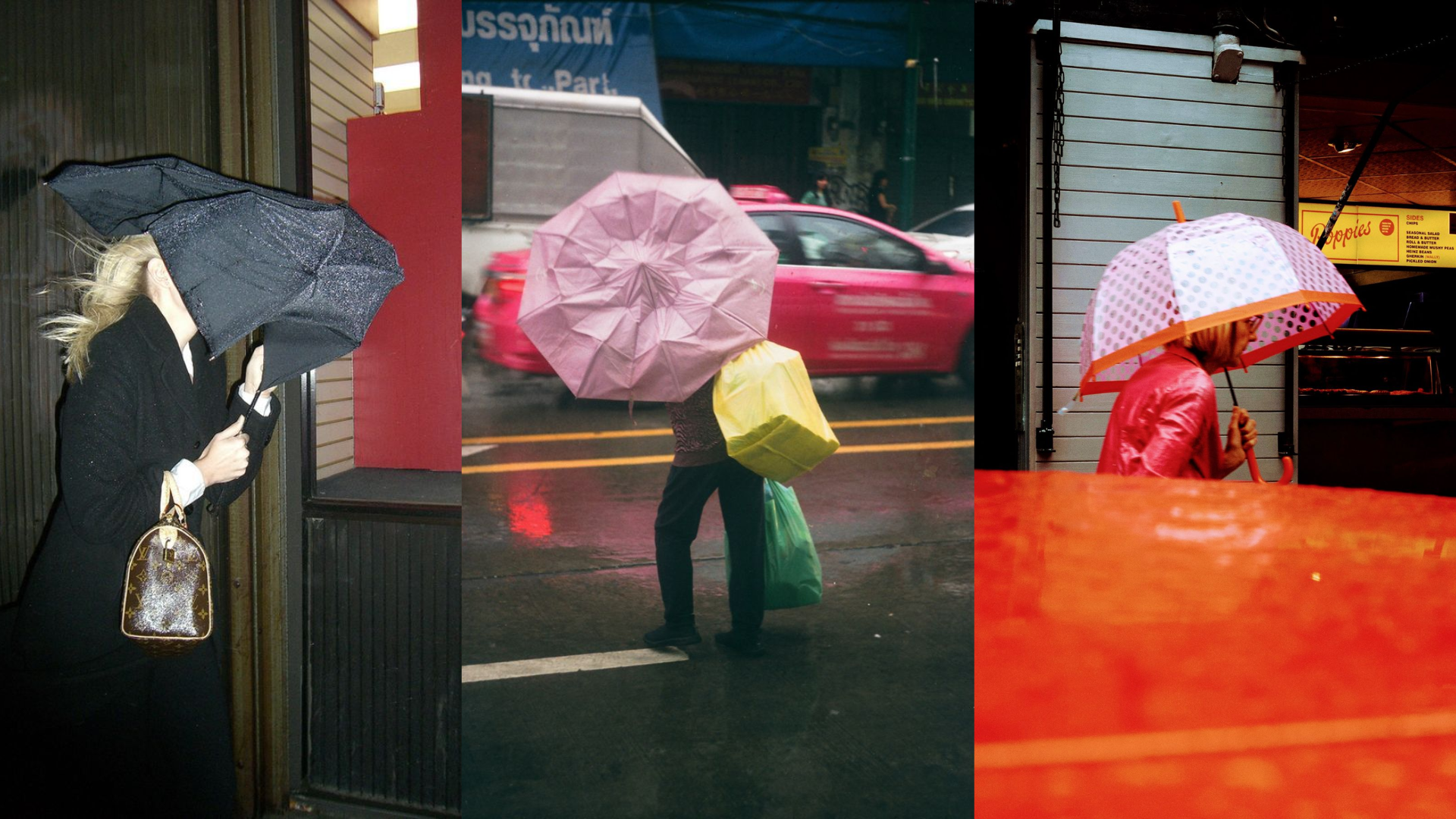
The History of the Umbrella: From Parasol to Fashion, Protection and Unity.
Soundtrack of this piece:
This summer, I almost died from the heat. And the only thing that allowed me to have something close to a normal life was my umbrella. That object, which in Western culture has been relegated to winter and rainy days, saved what was, for me, one of the hardest summers of my life. As a friend of mine says, this has been the coolest summer of the rest of our lives.
That is why I felt the need to talk to you about it. Partly because of its undeniable usefulness. But as I reflected on it and looked further into its history, I could not help but wonder: can the umbrella build bridges in a divided world?
In different places and at different moments in time, different civilisations ended up arriving at a similar solution to one of the most basic human needs: protection. Protection from the sun, from the rain, from the harshness of a hostile world.
As early as ancient Egypt, around 2051–2030 BC, we can already see its protective role against the sun. However, it was also a sign of social distinction, reserved for a few, creating a devide between people.

As the years go by, while its main function remains protection from the sun, its divisive role evolves. It no longer marked only social differences, but gender differences too. In ancient Greco-Roman societies, and for centuries afterwards, it was mainly women who used it to protect themselves from the sun, often for reasons of beauty and status.This use would continue for years, both in Western and Eastern cultures. That changes when China developed a more sophisticated version, capable of protecting against both sun and rain. What I find particularly interesting is that these developments happened almost simultaneously, despite the distance between them.
But let me take this thesis a little further. If the same solution appeared in very different parts of the world, with little communication between them, and is still used across cultures today, perhaps we are not so different after all.
Over the centuries, East and West would both normalise the use of this object. In Europe, however, a fairly clear division would emerge: the parasol would become increasingly associated with the feminine sphere, while the umbrella would progressively become linked to the masculine one.
Between the Enlightenment and industrialisation, Europe would grant the parasol the status of a fashion accessory and personal adornment. Made from silk, ivory, coral and sculptural handles, the parasol became an unmistakable symbol of status and an instrument of seduction.


With changing fashions and the appearance of new methods of protection, such as sunscreen, the parasol would gradually disappear, almost falling into oblivion. The umbrella, on the other hand, would remain with us.
Industrialisation would progressively turn it into a mass object, transforming what had once been a clear social marker into something used by almost everyone.
Perhaps that is also part of what makes it so interesting: the same object, once reserved for a few, ends up responding to a need shared by everyone, bringing together different cultures and social classes. For me, the umbrella, or the parasol, is therefore also a representation of our unity as a species, beyond the divisions we have created.
So, taking inspiration from our friends in the East, I suggest that we bring this object back into our increasingly hot summers, both for its protective function and for its unifying symbolism.

What to look for before buying one
As the rainy season begins, many of us will be looking for a new umbrella. So why not choose one with summer in mind too? If you are buying one now, there are three things I would look at:
UV protection Look for UPF 50 or 50+, rather than vague claims such as “UV protection”. If you want to use it in summer too, this should be the first thing you check.
Size and weight It needs to create enough shade to be useful, but still be light enough to carry around. Too small, and the protection is limited. Too heavy, and you will probably leave it at home.
Structure and durability Pay attention to the ribs, joints, stitching and fabric. Ideally, choose one that is also waterproof, so the same object can protect you from both rain and sun.
Make it last Let it dry open before storing it. I have ruined more than one umbrella by folding it away while it was still wet. Trapped moisture can encourage rust on the metal parts, weaken the mechanism and leave marks or smells on the fabric.
Here are a few of my picks:

Anatole
Founded in Paris, Anatole brings a more contemporary approach to the umbrella, combining compact design, strong colours and patterns with models made for both sun and rain.

Piganiol
Founded in Aurillac in 1884, Piganiol combines traditional French umbrella-making with contemporary design. Some of its models offer UPF 50+ protection, making them suitable for both rain and sun.

Makita Shoten
Founded in 1866, Makita Shoten is known for its traditional umbrella-making and woven fabrics. Its umbrellas combine Japanese craftsmanship with practical protection from both sun and rain.
In the end, bringing it back into our summers is not such a nostalgic idea. It may simply be a practical one. And a small reminder that, despite everything that divides us, some needs remain universal.

Leave a Reply